

In this series on our blog, we'll go through each press type one by one and discuss their features, advantages, and disadvantages and how all those elements make them the right choice for certain applications. In this post, we'll focus on the applications most suited to hydraulic presses in roll forming operations.
Hydraulic Presses - Part 5
Hydraulic presses are an essential part of many roll forming systems due to their precision, controlled force, and versatility. These presses perform a wide range of in-line operations that add value and functionality to formed metal profiles. Below are the most common applications for hydraulic presses in roll forming environments.
1. Piercing and Notching
Hydraulic presses are widely used for creating holes, slots, or notches in metal profiles. These features are essential for:
- Fastening or assembly: Creates precise holes and slots for secure fastening and efficient assembly integration.
- Ventilation or drainage: Forms clean openings to allow for effective ventilation or drainage in finished profiles.
- Alignment or registration marks: Produces accurate alignment or registration marks to ensure proper fit and positioning during assembly.
- Assembly Compatibility: Ensuring components fit seamlessly with other parts in the system.
- Customization: Supporting diverse design needs by enabling intricate patterns and unique hole placements.
The consistent, controllable force of a hydraulic press ensures clean cuts and precise placement, even in high-tensile materials.
2. Cut-Off Operations
Hydraulic presses perform cut-off operations to shear parts to their final length. They deliver:
- Clean Edges: Producing smooth, burr-free cuts that reduce the need for secondary finishing processes.
- Accuracy: Ensuring consistent lengths, even for high-speed production lines.
- Efficient shearing without excessive wear or deformation
This precision helps manufacturers maintain high-quality standards while optimizing production efficiency continuous production lines where timing and precision are critical.
3. Embossing and Forming
Hydraulic presses are also used for adding features or shapes to materials, enabling manufacturers to meet specific design requirements. Applications include:
- Embossing: Creating textured surfaces or patterns to enhance product aesthetics and functionality.
- Forming: Shaping profiles into unique configurations, such as bends or flanges, to meet complex design criteria.
The adaptability of hydraulic presses allows them to handle a wide range of forming tasks, from simple to intricate, making them an indispensable tool for customization.
The ability to apply consistent pressure throughout the stroke makes hydraulic presses perfect for forming detailed features without overworking the material.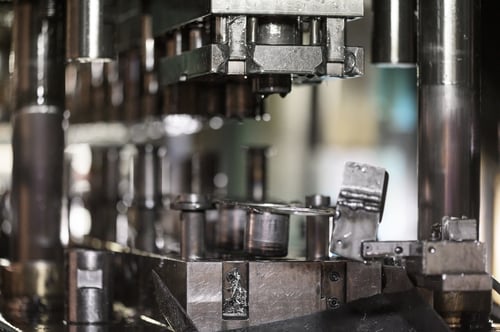
4. Shearing and End Trimming
Hydraulic presses are used for precise shearing or trimming of profile ends to meet dimensional or functional requirements. This is commonly applied in products like framing components, metal studs, or structural sections.
5. Tab Creation or Knockouts
Roll formed parts often require tabs or knockout sections for connection points or wiring access. Hydraulic presses can perform these operations with precision and minimal distortion to surrounding areas.
6. Part Separation
In some roll forming systems, parts are formed continuously and later separated using a hydraulic press. This may involve:
- Pre-punched features aligning with break lines
- Full-width shearing for final part release
This process allows high-speed forming to continue uninterrupted while final parts are removed at the proper cycle points.
Why Hydraulic Presses Excel in These Applications
- Consistent Force across the full stroke
- Programmable control for timing and pressure
- Adaptability to different materials and die designs
- Compact design for easy integration into roll forming lines
From piercing and notching to cut-off and embossing, hydraulic presses support a wide range of critical in-line operations in roll forming. Their precision, flexibility, and ability to handle complex tasks make them a go-to solution for manufacturers looking to enhance part functionality and production efficiency.
In some operations and configurations, a different type of press might be more efficient or provide added benefits. Be sure to visit our other guides to mechanical presses and air presses to learn which type of press might be best for your roll forming operation.